Author: mohamed saleh

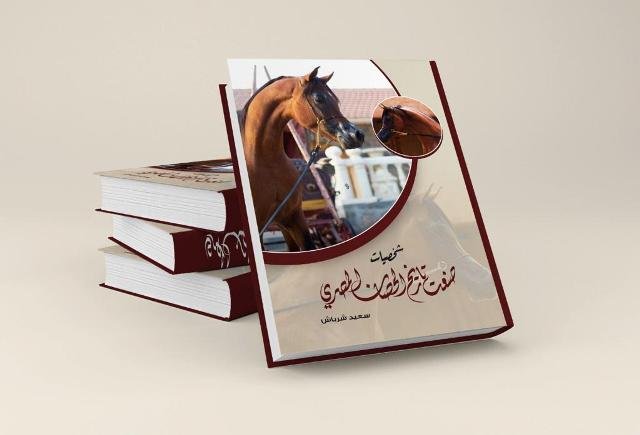
Professor Dr. Salah El-Din Fathi, head of Al-Zahraa station for breeding purebred Arabian horses, says in the introduction to the book “Persons Who Made the History of the Egyptian Horse.” As I was browsing through the book “Persons Who Made the History of the Egyptian Horse,” I remembered the words of God Almighty, “And say ‘Work, and God will see your work and your foundation’.” .. So I realized that this work is not just a book added to the Arabic library, among the author’s books, but rather that it is a work – in my opinion – that has…
Read More

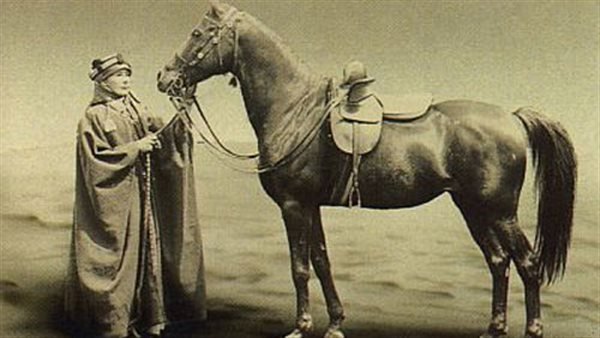
Lady Ann Blunt and her husband founded Crabbet Park-Sussex – England in Sussex, England, and it was called Crabbet Park (Crabbet Farm for Arabian Horses). She was placed in Sheikh Obaid’s stables, then traveled to the Crabbet farm, and they were called Crabbet horses, although they are 100% Egyptian, and all the horses she produced on her farm were called Crabbet horses. The book, Purebred Arabian Horses, authored by Prince A. G. Sherbatov and Count S. A. Stroganov, issued by the King Abdul Aziz Public Library in 1999 A.D., reviewed and edited by Dr. Awad Atta Al-Badi, describes the Crabbet…

Read More
الخيول المصرية

The blood of Egyptian horses was renewed with the Islamic conquest of Egypt in the year 21 AH corresponding to 642 AD, as Egypt was a Roman province of the Byzantine state. Amr ibn al-Aas entered Egypt from the Sinai, and headed to Belbeis in the Sharkia Governorate. With the fall of Alexandria, the Islamic era began, and the Coptic majority of Egyptians converted to Islam after the conquest. It was mentioned in the book “The Egyptian Countryside in the Islamic Era” (p. 29) quoting from Al-Maqrizi (Al-Khitat, vol. 1 p. 20) that Amr ibn al-Aas was keen to follow…

Read More

Prince Muhammad Ali Tawfiq pointed out in his book “Arab Horse Breeding” that the Coptic King of Egypt had gifted the Prophet, may God’s prayers and peace be upon him, Mrs. Maria and with her the Arabian horse “Al-Donglawi Al-Lazzaz”, and the Egyptian Donglawi horse continued to flourish until the year 300 AH. Al-Zubayri also said in “Taj Al-Arous” (p. 314 and 315) that Al-Lazaz was the mare of the Prophet, may God bless him and grant him peace, named after him because of the intensity of his pleasure and the meeting of his character, and it was he who…

Read More
سباق فرس

The Messenger of God – may God’s prayers and peace be upon him – ran his horse Adham on Muslim horses in al-Muhassab in Makkah, so his horse came earlier, so the Messenger of God – may God’s prayers and peace be upon him – got down on his knees, until when he passed by, he said to him: “Lebah” (the name of the horse). The Prophet’s bet on his horse In the Musnad of Imam Ahmad from the hadith of Abdullah bin Omar also that the Prophet – may God’s prayers and peace be upon him – preceded among…

Read More
المراهنة

Islam permitted betting on horses without being resolved, as required by the previous news, and what the judge mentioned from the three aspects. Al-Shafi’i and other scholars mentioned the following: Al-Shafi’i – may God be pleased with him – said about what Al-Muzni narrated in his summary: The race is three: the ruler or a non-governor gives him from his money, and that is to race between the horses to an end, so he makes something known to the former, and if he wants he made for the prayer and the third and the fourth, this is permissible and made…

Read More

Horse racing came in the life of the Prophet, may God’s prayers and peace be upon him, who encouraged the breeding and training of the most selected horses among his followers, and he supervised the training of his horses. Moreover, he attended many races, and often gave prizes to the winners. The first races were held in the fourth Hijri year, and horses did not race until they were five years old; Because the distances were long, and the Arabs were afraid of the many injuries to young foals. The two sheikhs narrated on the authority of Ibn Omar -…

Read More

Of the selection of the breeding programme, Hammont wrote that he personally selected for each mare he believed to be the most suitable in terms of shape and proportions, and a number was placed on each horse’s hoof, and this number was also recorded in a European register of all horses, with a copy of the record in At hand, and if the result does not live up to my expectations, I adjust and change the mating. As a result of the fortified feeding program and generally better conditions, in the first year 90 healthy foals were born, which Hammont…

Read More

We present the slanders of St. John about the Arabs and Egyptians raising horses, which he described as a cruel way to secure their horses, whether in the stable, in the field, or in the camp, which he sees – from his point of view – to be very harmful, as each leg is fixed to the opposite leg behind it with a short rope. So that the first is tied with a large rope under the body, whether when the horse is feeding, or when resting in the field, and there are two other ropes that pass from the…

Read More

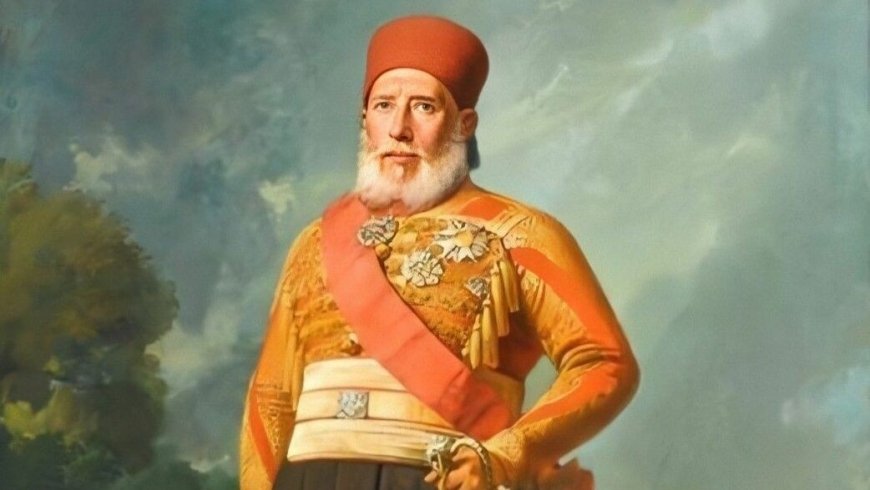
The formation of the Egyptian cavalry began on the latest global system after the return of the Egyptian armies from the Morea War. Ibrahim Pasha saw in this country the French cavalry, and realized what was the importance of the knights who work in groups, fragments or Orta, and the privilege over irregular cavalry, and that this privilege is similar to Its counterpart in the regular pedestrian versus the irregular pedestrian. As soon as he returned to Egypt, he diligently and diligently directed his efforts to the formation of the cavalry according to the new system, and for this purpose…

Read More