Author: mohamed saleh

سباق الخيل

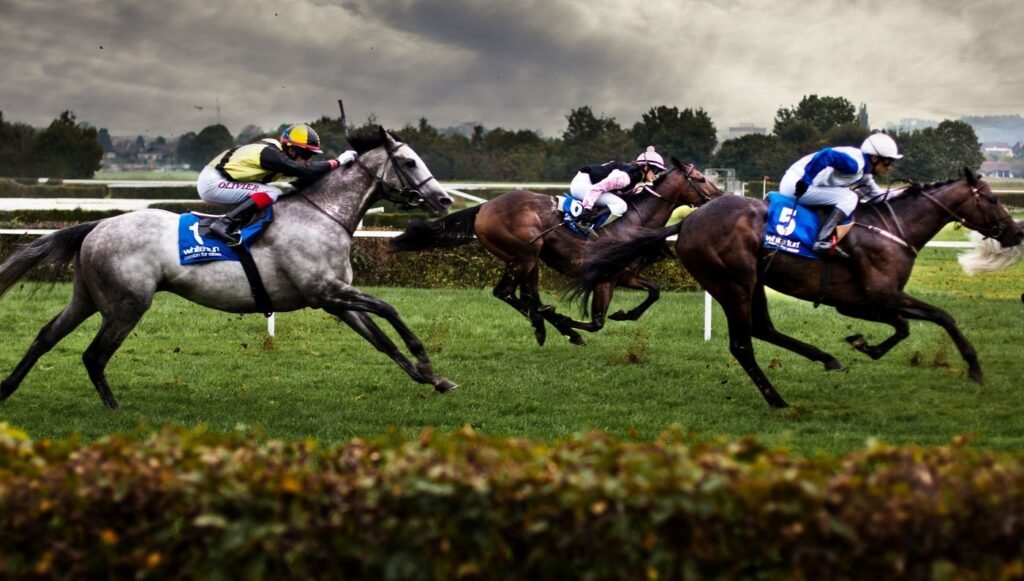
Egypt is one of the first countries interested in horse racing, as it is the country that obtained membership number 2 in the “Jockey Club” organization after England, which is the organization responsible for organizing races, and Egypt has played a vital role in this field since 1890, and it had a great role in attracting The best Arabian horse breeds from the Arabian Peninsula, until it reached this great position in the Arabian horse. Dr. Ahmed Mabrouk explains in his book “A Journey to Arabia” the importance of the race in Egypt, that during his trip to the Hijaz,…
Read More

Prince Muhammad Ali Tawfiq was keen to pass on his experience in raising horses to future generations, as he goes on to review important aspects of his experiences, saying: I found that no matter how good the father and mother are, there is no way to verify the creation of a good product, but rather it may not happen from a large herd. Of the good mares except on one or two excellent or perfect foals. As long as I was told that there are excellent horses in Yemen, I asked my friend, General Aziz Pasha, the governor of Yemen,…

Read More

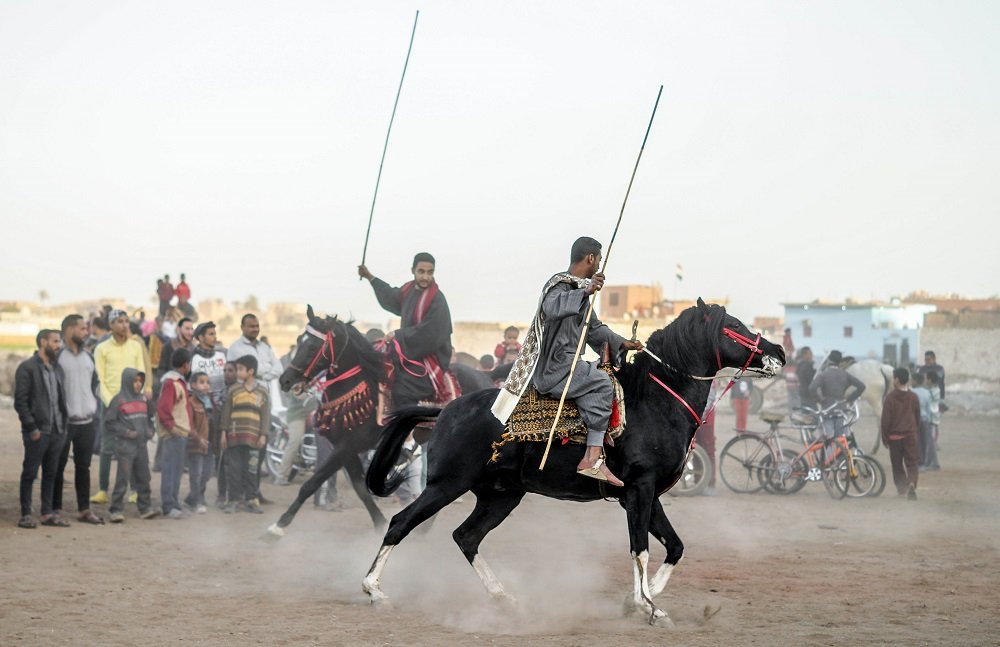
We all use the verb “spear, spear” if we want to express “running fast”. This usage is ancient in the Egyptian tongue to the extent that our ancestors in the last century used to call the horse race “the spears”. Horse spears spread throughout the country during the reign of Sultan Ibn Qalawun, where he was present by himself to watch spears (horse racing among the Mamluks). The spears spread among the common people, and the horse spears continued until now in Upper Egypt. The spear has a special place in the centers and villages of Aswan Governorate, where the…

Read More
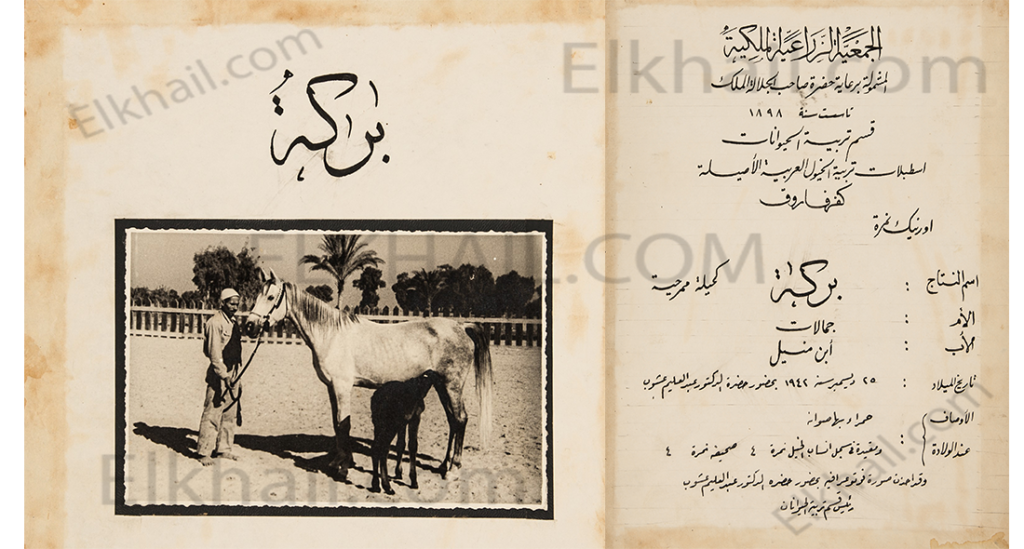
بركه

The mare “Baraka” Kahiliah Marhahi, was born on December 25, 1942, from the mother “Jamalat” and the father Ibn Manil, and her descriptions are: “red with flint”, and she is registered in the horse genealogy register Namera 4, tablature 4. A photo was taken of the mare “Baraka”, in the presence of Dr. Abdel Alim Ashoub, Head of the Education Department at Kafr Farouk Station.

Read More

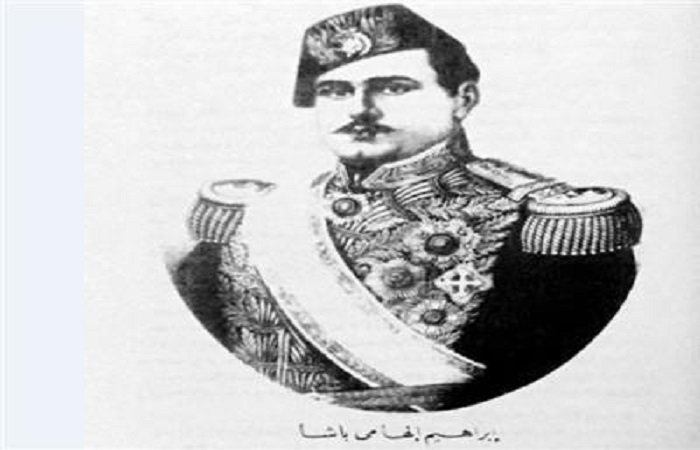
Whoever reads history well, and peruses documents and documents, knows that Ilhami Pasha preserved his father’s horses, and that horses multiplied during his reign, and that out of his strong love for horses, he became giving them gifts to those he loved, especially since he had horses that no one else had, represented in the treasure he cared about. His father. Ilhami Pasha held an auction to sell some horses, and they were sold for a great price. Prince Muhammad Ali Tawfiq tells of the auction organized by Ilhami Pasha months before his death in which he sold 240 horses,…

Read More
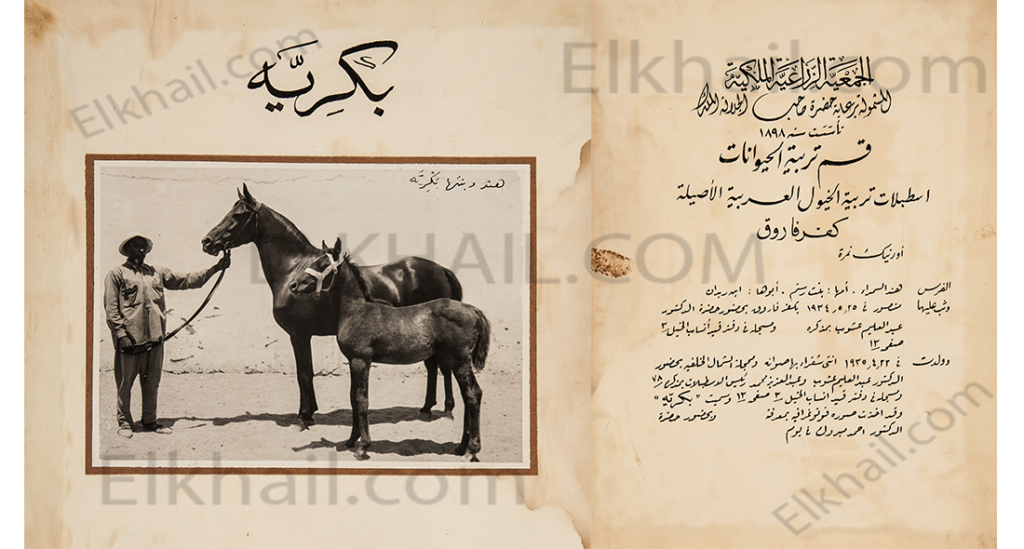
بكريه

The mare Bakriya was born on April 22, 1935, from mother Hind al-Samarra and father Mansour, and was entered in the horse genealogical register, Namera 3, Number 13. The description of the mare, Bakria: “Blonde with a flint and a bollard in the north background.” A photograph was taken of her in the presence of Dr. Ahmed Mabrouk, Head of the Animal Breeding Department at Kafr Farouk Station.

Read More

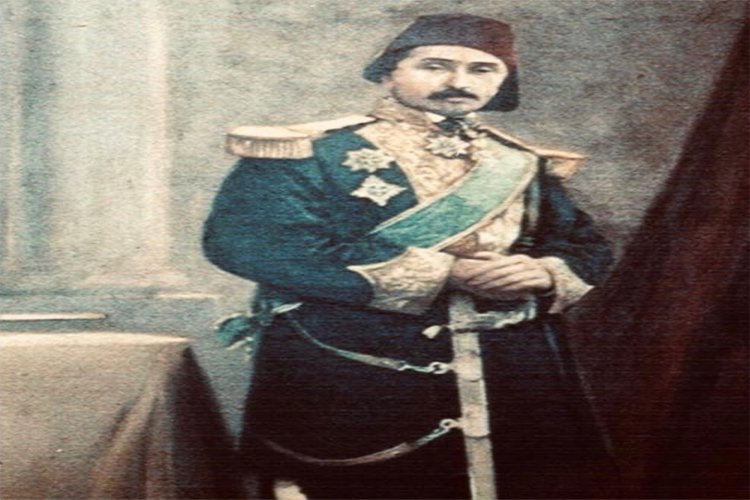
If Abbas Pasha I was the founder of the Egyptian horse kingdom and the collector of its great breeds from everywhere, especially the Arabian Peninsula, then the credit for preserving these breeds goes to Ali Pasha Sharif, for the blood of the Egyptian horse that is presently present in all countries of the world belongs to his horses. Prince Muhammad Ali Tawfiq says about him in his book “About the Pure Horses in Egypt”: Egypt has been fortunate to have a great man who is passionate about horses like Ali Pasha Sharif and constantly undertakes to raise the best of…

Read More

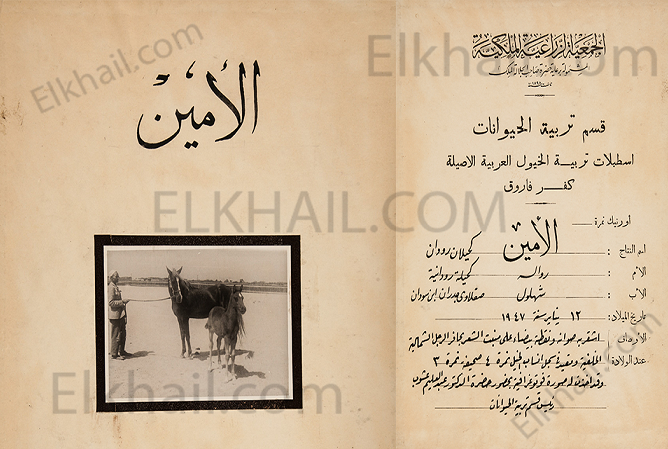
The “Ameen” horse, Khilan Rodan, was born on January 12, 1947, from the mother, Rawala, who is Kheila Rodaniya, and the father, Shahloul Saqlawi Jadari, the son of Sudan. Al-Amin described it as “blond with a flint and a white spot on the hairline on the left man’s hoof.” A photograph was taken of him in the presence of Dr. Abdel Alim Ashoub, head of the animal husbandry department at Kafr Farouk station (Al-Zahra station).

Read More
أدب الخيل

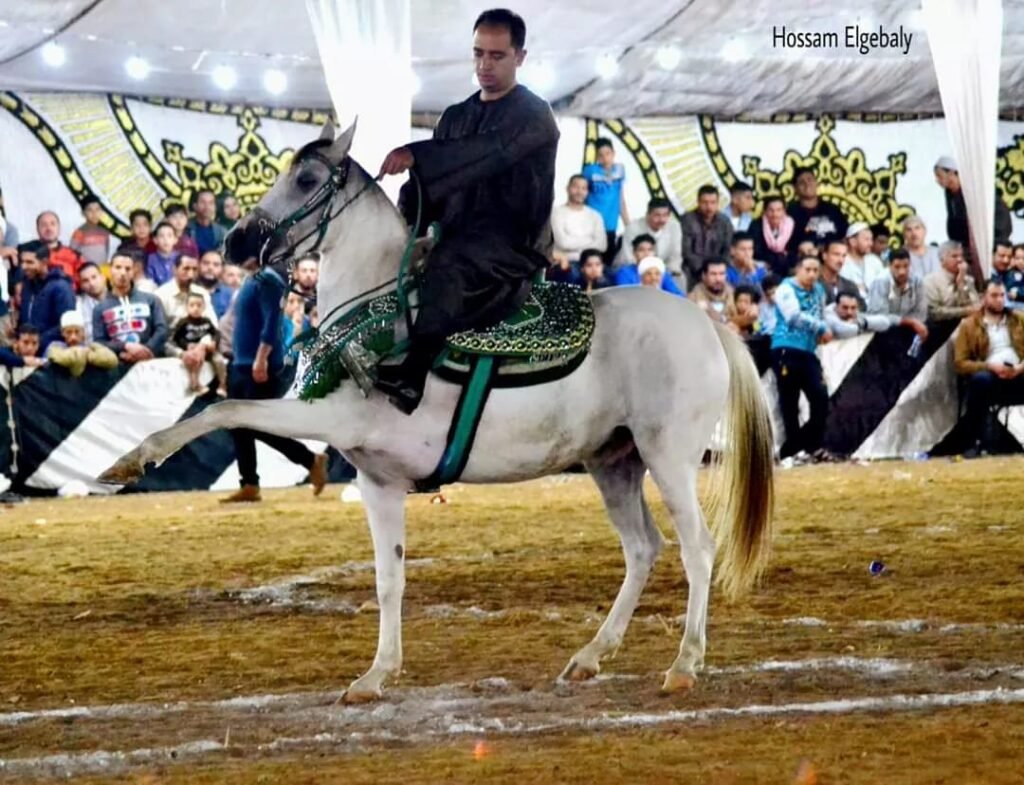
Horse literature has gained great popularity in weddings and happy occasions; In the past, there were no rural bands, wedding halls, or DJs, and the municipal drum and flute were the main and essential element in all weddings, and there was a connection and love between the hearts of the Egyptians and their dancing horses, and there became pioneers of horse literature or dancing horses, waiting for the weddings. To see their beautiful lover. As a result, the skills of folk equestrianism and its knights developed, and there became a kind of courtesies at weddings, and there were those who…

Read More

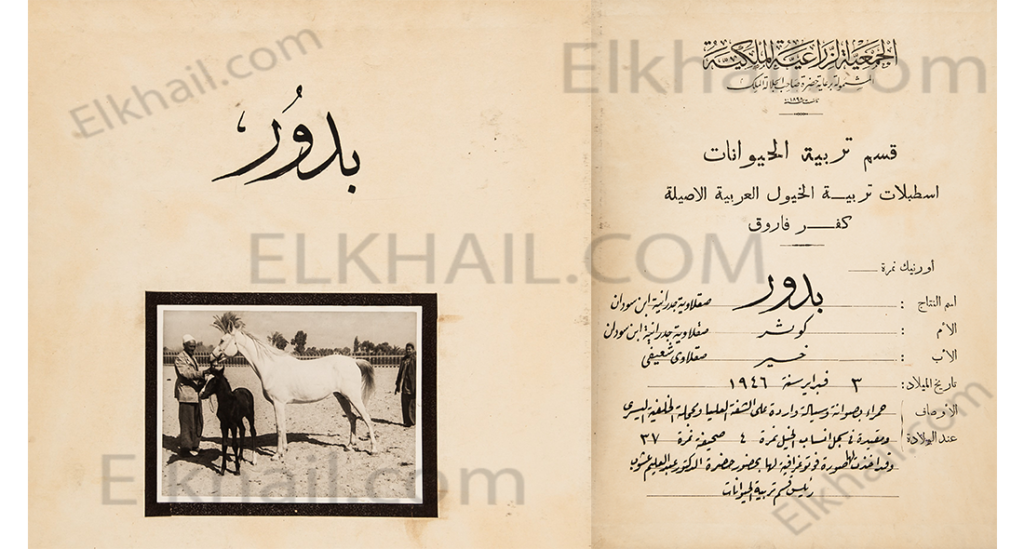
The mare “Badur” “Saqlawiya” “Grandyah” Ibn Sudan, was born on February 3, 1946, from the mother Kawthar, who is “Saqlawiya” “Grandyah” Ibn Sudan, and the father “Khair” “Saqlawi” Shaifi, and it is registered in the horse genealogical register, number 4 Number 37 newspaper. Bedour’s descriptions are: “a red with a flange and a flowing spur on the upper lip and the left posterior obturator,” and a photograph was taken of it in the presence of Dr. Abdel-Alim Ashoub, Head of the Animal Husbandry Department at Kafr Farouk Station (Al-Zahraa Station).

Read More